Women, justice, health and the poker table
Open Hand covers two subjects. One is the legal system as it meets women: pregnancy in custody, mothers separated from their children, a contraceptive whose label has changed twice. The other is the poker table, where women have had a World Series event of their own since 1977 and still made up fewer than one Main Event entrant in twenty in 2026.
Pregnant and in restraints: what the law says now
Short answer
Federal prisons may not restrain a woman during pregnancy, labor or postpartum recovery except in narrow cases. State rules still vary.
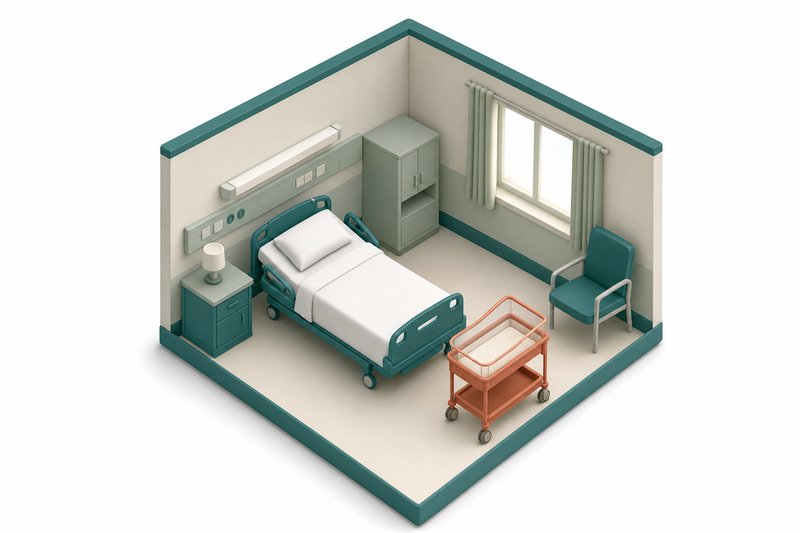
For years, women in American jails and prisons gave birth with a wrist or an ankle chained to the bed. Doctors' groups objected on medical grounds: restraints make it harder to move during labor, to respond to an emergency, and to hold a newborn. Advocacy groups, among them the National Women's Law Center, collected the cases and the policies state by state, and the issue reached Congress.
The First Step Act of 2018 settled the question for federal custody. Restraints on pregnant women are banned from the moment pregnancy is confirmed until postpartum recovery ends, unless an official judges a woman an immediate flight risk or a serious threat, or a clinician decides restraints are needed for her medical safety, and even then belly chains and leg restraints stay off the table. County jails and state prisons follow their own laws, and those laws differ in what they cover, who enforces them, and whether anyone keeps count.
Mothers behind bars: why family-based treatment matters
Short answer
Most women in prison are mothers, and many were their children's primary caregivers before arrest. A few states now let a judge weigh a mother's children at sentencing.
When a father goes to prison, the children usually stay with their mother. When a mother goes, the children often go to grandparents, to relatives, or into foster care, and a long sentence can end parental rights altogether. Once a child has spent 15 of the most recent 22 months in foster care, federal law generally requires the state to seek termination of parental rights.
A 2010 national report card graded every state on three things: how pregnant women were treated in custody, whether prisons offered prenatal care, and whether courts could send mothers to family-based treatment instead of a cell. Most states scored poorly on at least one. For the third grade the report leaned on a 2003 federal evaluation: six months after family residential treatment, 60 percent of the mothers were clean and sober and 44 percent of the children had come back from foster care. It was not a head-to-head comparison with prison.
The same year, two young women wrote open letters to the founder of Craigslist, and that September its adult services section closed in the United States. The guide to the Dear Craig letters follows what came after, up to the federal law of 2018.
Depo-Provera: what the research and the lawsuits say
Short answer
The contraceptive shot carries an FDA boxed warning about bone loss and, since December 2025, a separate label warning about meningioma, a usually benign brain tumor. Most of the federal lawsuits over that risk are being resolved through a settlement signed in July 2026.
Depo-Provera is an injection of medroxyprogesterone acetate given every three months. ACOG calls it highly effective, and its privacy and four-shots-a-year schedule appeal to many users, especially adolescents. Since 2004 its label has carried a boxed warning that long-term use can reduce bone mineral density.
In 2024 a large French study published in The BMJ found that women who used the drug for a year or more had a higher risk of meningioma. In December 2025 the FDA approved a meningioma warning for the label. Lawsuits in the United States were combined in federal court in 2025, and a settlement covering most of them was signed in July 2026. If you are on the shot, ask a clinician whether your length of use changes what they recommend. Do not stop on your own.
| Topic | What changed | Where it stands |
|---|---|---|
| Restraints in pregnancy | First Step Act, 2018 | Banned in federal custody with narrow exceptions; state laws vary |
| Mothers in prison | 2010 national report card | Family-based treatment available in some states, not all |
| Depo-Provera | Boxed warning 2004; meningioma study 2024 | Meningioma warning added December 2025; settlement signed July 2026 |
Women at the poker table
Short answer
Women are still a small minority at the tables, and some of the best players of the last twenty years are among them.

At the 2026 WSOP Main Event, 431 of the 9,208 entries were women. The few who reach the top are easy to name. Vanessa Selbst won three World Series of Poker bracelets and spent time at the top of the Global Poker Index. Annette Obrestad won the first World Series of Poker Europe main event at eighteen. Kristen Foxen, who began her career as Kristen Bicknell, holds six bracelets, more than any other woman, and leads the women's all-time money list. Liv Boeree, who first learned the game on a British reality TV show in 2005, won a European Poker Tour title in Sanremo before turning to science communication.
Most women who play never reach a results list at all. For a regular in a mid-stakes cash game, bankroll and mentality matter more than any trophy. Those who travel plan the year around festival calendars, and a Hendon Mob page still listing the poker tournaments that will take place in 2019 shows how crowded one such year was.
The stories follow the money list, the bracelets and the Ladies Event since 1977.
- The best female poker playersRanked by the all-time money list, with their WSOP bracelets.
- Women at the WSOPFrom the first Ladies Event in 1977 to a record Main Event field.
- What makes London a top destination?Casinos, card rooms and the city around them.
- What are the safest online casinos in the USA for female players?Licenses, payments and what to check first.
Playing online with your eyes open
Short answer
In the United States, real-money online casinos are legal only in a handful of states. Check the license before anything else.
A safe site is one licensed by the regulator in your own state, with clear withdrawal rules and tools to set limits. Our guide walks through what to look for, which warning signs matter, and how to read independent reviews of licensed sites, as tested by Scams.info.
How we work
Open Hand is written by a small editorial team. How sources are chosen and pages are dated is set out on the About page.
Questions readers ask
Is shackling pregnant women still legal anywhere in the US?
In federal custody it is banned with narrow exceptions. Rules in state prisons and county jails depend on state law and on local policy, and enforcement varies.
Where do the children live during family-based treatment?
With the parent, in a residential program where the parent is treated for substance use instead of serving time apart from them.
Should I stop Depo-Provera because of the meningioma research?
Do not stop or switch on your own. Ask your doctor how long you have used it and which alternatives fit you.
Who was the first women's world poker champion?
Jackie McDaniels. She won the first ladies' event at the World Series of Poker, a seven-card stud tournament with a $100 buy-in, in 1977.
How do I know an online casino is legal where I live?
Find the site on your state regulator's own list, opened by typing the regulator's address yourself. A license badge on the casino's page is not proof on its own.